Last updated: May 2026
A stock delisting can surprise investors when they are not watching the warning signs. One day a stock trades normally on a major exchange; later, trading may be suspended, moved to a less liquid venue, or removed from the exchange entirely. When that happens, selling can become harder, spreads can widen, and account records may become more confusing.
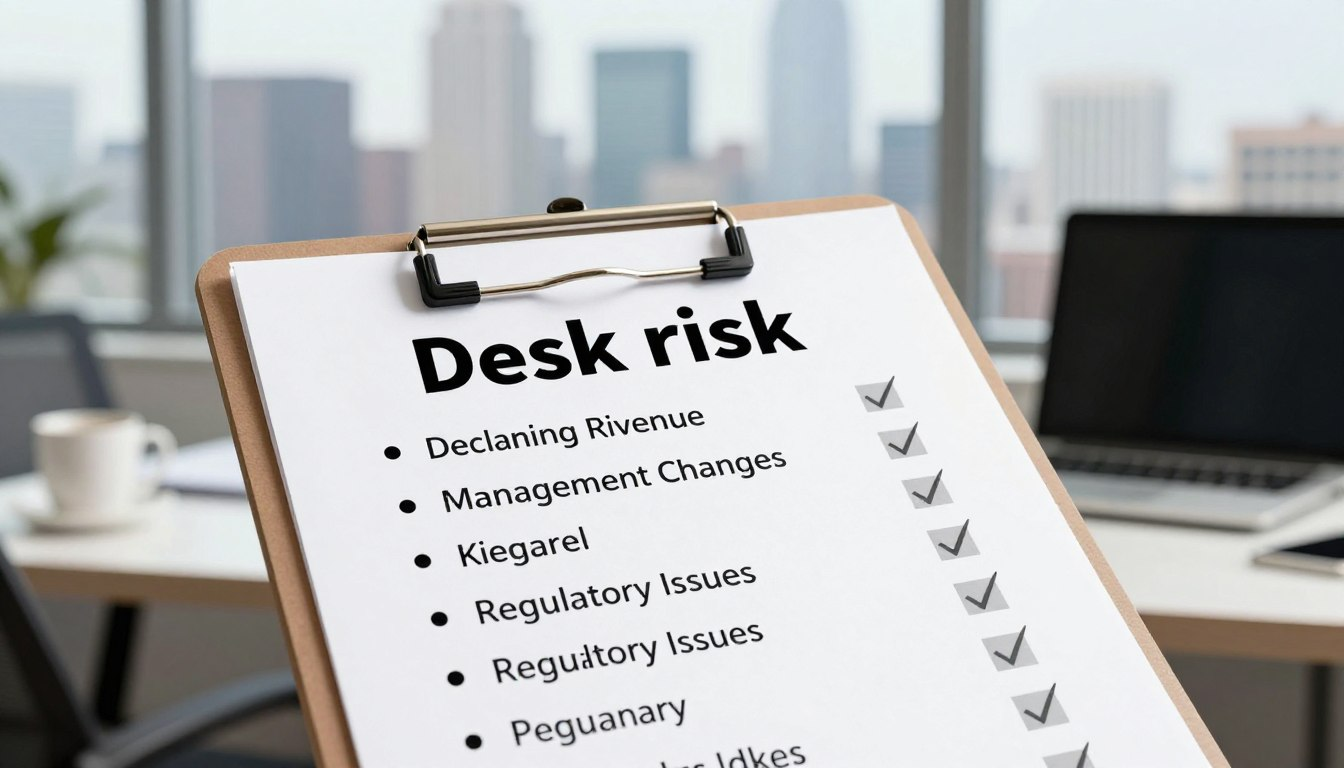
This guide gives you a practical delisting risk checklist for spotting common red flags before a situation becomes urgent. It explains the financial, regulatory, liquidity, governance, and communication signals that may suggest a company is moving closer to exchange trouble.
What Stock Delisting Means
Stock delisting means a company’s shares are removed from trading on a specific exchange. This can happen voluntarily, such as after a merger or going-private transaction, or involuntarily when a company fails to meet exchange requirements.
For investors, delisting matters because it can reduce liquidity and transparency. A stock that no longer trades on a major exchange may become harder to sell, may have wider bid-ask spreads, and may be followed by fewer analysts or institutional investors.
Delisting rules differ by exchange. Common standards may involve minimum share price, market value, shareholder distribution, timely financial reporting, and corporate governance. Because the exact rules change by market, official exchange notices and company filings are always the best starting point.
If a company is involved in a merger or another corporate action, the situation may be different from a compliance-based delisting. For that scenario, see Merger Ticker Timeline: When the Old Disappears and the New One Starts.
Voluntary vs. Involuntary Delisting
Not every delisting has the same meaning. The first question to ask is whether the delisting is voluntary or involuntary.
Voluntary delisting
A voluntary delisting happens when the company chooses to leave an exchange. This can happen after an acquisition, a going-private deal, a restructuring, or a decision to move trading to another market. In these cases, official company announcements usually explain what shareholders should expect.
Involuntary delisting
An involuntary delisting happens when an exchange removes a company for failing to meet listing standards. This may involve low share price, late filings, weak financial condition, governance problems, or repeated rule violations.
Involuntary delisting usually deserves closer attention because it can signal deeper business, reporting, or liquidity problems.
Financial Warning Signs to Watch
A company’s financial condition is often one of the earliest places where delisting risk becomes visible. A weak balance sheet or long-term decline does not automatically mean delisting will happen, but it can increase the chance of exchange scrutiny.
Share price near exchange minimums
Many exchanges have minimum price requirements. If a stock trades below the required level for an extended period, the company may receive a deficiency notice and a deadline to regain compliance.
One common response is a reverse stock split, which reduces the number of shares and raises the price per share mechanically. A reverse split does not fix the company’s business by itself. It only changes the share structure. For more detail, see Reverse Stock Splits Explained.
Falling market capitalization
Some listing standards include market value or public float requirements. If a company’s total market value declines sharply, it may become more vulnerable to exchange action depending on the rules of the listing venue.
Persistent losses or declining revenue
Repeated revenue declines, operating losses, or shrinking margins can signal business stress. These problems may lead to financing pressure, debt covenant issues, or additional share issuance, all of which can make a weak listing situation worse.
Negative shareholder equity
Negative shareholder equity means a company’s liabilities exceed its assets. Depending on the exchange and jurisdiction, this can be relevant to continued listing standards or investor risk assessment.
Compliance and Reporting Red Flags
Exchange problems often begin with missed filings, accounting delays, or formal compliance notices. These signals are important because they are documented publicly and can show that the risk is no longer just theoretical.
Late or missing financial reports
Public companies are expected to file required reports on time. When annual or quarterly reports are delayed, investors should look for the reason. A one-time administrative delay is different from repeated late filings, auditor disputes, or internal control problems.
Auditor concerns
A going-concern warning, qualified opinion, auditor resignation, or disagreement with management can be a serious warning sign. These issues may not always trigger delisting directly, but they can increase regulatory attention and investor concern.
Official deficiency notices
A deficiency notice means the exchange has identified a specific listing problem. The notice usually explains the issue, the deadline to regain compliance, and possible consequences if the company fails to fix it.
These notices should be read directly, not only through news summaries. Company press releases may simplify the language, but the official filing or exchange notice usually provides the clearest details.
Weak governance or internal controls
Governance problems can include board independence issues, poor disclosure controls, related-party transactions, or repeated restatements. When governance problems appear alongside financial weakness, delisting risk may become more serious.
Trading Activity and Liquidity Concerns
Liquidity problems do not always cause delisting by themselves, but they can make a risky stock more difficult to manage. Low volume, wide spreads, and reduced market participation can make it harder for investors to buy or sell at a fair price.
Low trading volume
Sustained low volume can be a warning sign because fewer buyers and sellers are active in the market. If volume dries up during a period of negative news, the stock may become harder to exit without affecting the price.
Wide bid-ask spreads
The bid-ask spread is the difference between what buyers are willing to pay and what sellers are asking. A wide spread can signal weak liquidity and higher trading costs.
Reduced market-maker or institutional interest
Market makers help maintain active quotes, and institutional investors can add depth to trading. When both disappear, the stock may become more fragile, especially during bad news or compliance problems.
Liquidity can also change around trading pauses or regulatory events. For a related explanation, see Trading Halt Meaning: Volatility Pauses, News Pending, and LULD.
Governance and Leadership Warning Signs
Leadership instability can sometimes appear before deeper problems become obvious. It does not prove delisting risk by itself, but it is worth watching when combined with financial weakness or late filings.
Sudden executive departures
Unexpected resignations by the CEO, CFO, auditor, or key board members can raise questions. A CFO departure may be especially important if it occurs near earnings, filing deadlines, restatements, or financing events.
Board independence problems
A board with limited independence or weak oversight may struggle to handle financial stress, related-party transactions, or disclosure issues properly.
Related-party transactions
Transactions involving insiders, affiliated companies, or major shareholders should be reviewed carefully. These transactions are not always improper, but weak disclosure or poor oversight can increase governance risk.
Poor disclosure culture
If a company repeatedly misses deadlines, issues vague updates, avoids basic investor questions, or frequently corrects prior statements, it may indicate deeper internal control problems.
Communication and Transparency Issues
Clear communication matters during difficult periods. When a company becomes less transparent while financial or compliance problems are increasing, investors should pay closer attention.
Reduced investor relations activity
Fewer earnings calls, fewer presentations, or less detailed updates may make it harder to understand the company’s condition. This does not automatically mean trouble, but it can reduce investor confidence.
Vague disclosures
Disclosures that avoid specific numbers, deadlines, or explanations can make risk harder to evaluate. Strong companies usually explain material issues clearly and provide updates when circumstances change.
Limited response to shareholder questions
If a company avoids reasonable investor questions about filings, compliance notices, debt, or liquidity, that can be a warning sign. Official filings should still be treated as the primary source.
How to Monitor Delisting Risk
A useful delisting checklist combines market behavior with official documentation. Price alone is not enough. The most important clues often appear in filings, exchange notices, auditor reports, and company disclosures.
Daily checks
- Watch unusual price declines.
- Check trading volume and bid-ask spreads.
- Look for official news or exchange notices.
- Confirm whether any trading halt or suspension has occurred.
Weekly checks
- Review new SEC filings or equivalent local-market disclosures.
- Check whether the company received a deficiency notice.
- Monitor market capitalization and liquidity trends.
- Look for changes in leadership or auditor status.
Monthly checks
- Review balance sheet strength, cash position, debt, and equity.
- Check whether revenue and profitability are improving or worsening.
- Review investor relations updates and earnings materials.
- Look for repeated delays, corrections, or unclear disclosures.
Quarterly checks
- Read the latest 10-Q, 10-K, or equivalent report.
- Review risk factors and management discussion sections.
- Check auditor language and internal control disclosures.
- Compare current compliance status with prior quarters.
Delisting Risk Checklist Table
| Risk Area | Warning Sign | What to Check |
|---|---|---|
| Share price | Persistent weakness near exchange minimums | Exchange listing rules and company notices |
| Market value | Sharp decline in market capitalization or public float | Exchange standards and recent market data |
| Financial health | Losses, debt pressure, negative equity | Latest 10-K, 10-Q, or equivalent report |
| Reporting | Late or missing filings | SEC EDGAR, exchange disclosures, company IR page |
| Audit | Going-concern warning or auditor resignation | Audit opinion and related filings |
| Liquidity | Low volume and wide bid-ask spreads | Broker platform, exchange data, market depth |
| Governance | Leadership instability or related-party concerns | Proxy filings, 8-K reports, board disclosures |
| Communication | Vague updates or reduced investor relations activity | Press releases, earnings calls, investor materials |
What to Do When You See Multiple Red Flags
This article is not a recommendation to buy, sell, or hold any security. The practical goal is to help you organize your review when several warning signs appear at the same time.
If you notice multiple red flags, start by reading official documents instead of relying only on headlines or social media. Check the company’s most recent filings, exchange notices, investor relations updates, and your broker’s corporate action messages.
If a corporate action changes your share count, ticker, or account records, your brokerage statement may provide useful clues. For help reading those records, see How to Read a Monthly Brokerage Statement.
Conclusion
Delisting risk usually builds through a combination of signals: weak financial performance, late filings, exchange warnings, low liquidity, governance problems, and unclear communication. One warning sign alone may not mean a stock will be delisted, but several warning signs together deserve careful review.
The safest approach is to stay organized. Read official filings, monitor exchange notices, check liquidity conditions, and keep your brokerage records updated. When a situation is unclear, rely on official sources first and seek qualified advice for decisions that affect your money or taxes.
For the most accurate details about a specific company, use official filings, exchange notices, company investor relations pages, and your broker’s records as primary sources.
Sources and Further Reading
- SEC EDGAR — Search official U.S. public company filings, including 10-K, 10-Q, 8-K, proxy statements, and disclosure history.
- SEC Investor Education / Investor.gov — Beginner-friendly investor education from the U.S. Securities and Exchange Commission.
- FINRA: Corporate Actions by Public Companies — Explains corporate actions and how they can affect investors and brokerage accounts.
- Nasdaq Listing Rules — 5500 Series — Continued listing requirements and standards for Nasdaq-listed companies.
- NYSE Listed Company Compliance — NYSE resources related to listed company compliance and continued listing standards.
- NYSE American Rule Filing SR-NYSEAMER-2024-72 — Official rule filing related to continued listing standards and compliance procedures.
FAQ
What is stock delisting?
Stock delisting means a company’s shares are removed from trading on a specific exchange. This can happen voluntarily after a corporate transaction or involuntarily when a company fails to meet listing standards.
Does delisting mean my shares disappear?
No. Delisting does not automatically erase your shares. However, it may make them harder to trade and may reduce transparency. Your broker or the company’s official notices should explain where and how the shares may trade after delisting.
What are common delisting warning signs?
Common warning signs include a persistently low share price, late filings, weak financial condition, exchange deficiency notices, low trading volume, auditor concerns, and governance problems.
Where can I check official delisting information?
Start with the company’s investor relations page, SEC EDGAR for U.S. issuers, and the exchange’s official listing or compliance resources. Your broker may also provide corporate action notices related to account-level changes.
Can a reverse stock split prevent delisting?
A reverse stock split can help a company mechanically raise its share price to meet a minimum price requirement, but it does not solve the underlying business problem by itself. Investors should still review the company’s financial condition and official filings.
What happens if a stock moves to an OTC-style market?
If a stock moves away from a major exchange, it may trade with lower liquidity, wider spreads, and less visibility. The exact outcome depends on the market, broker access, and the company’s ongoing disclosure obligations.
Is a delisting always bad?
Not always. A voluntary delisting after a merger or going-private transaction can be part of a planned corporate event. An involuntary delisting caused by compliance failure is usually more concerning and should be reviewed carefully.
How often should I check delisting risk?
For higher-risk stocks, it helps to review market behavior, official filings, exchange notices, and liquidity conditions regularly. Long-term investors may review these signals monthly or quarterly, while active investors may monitor them more frequently.